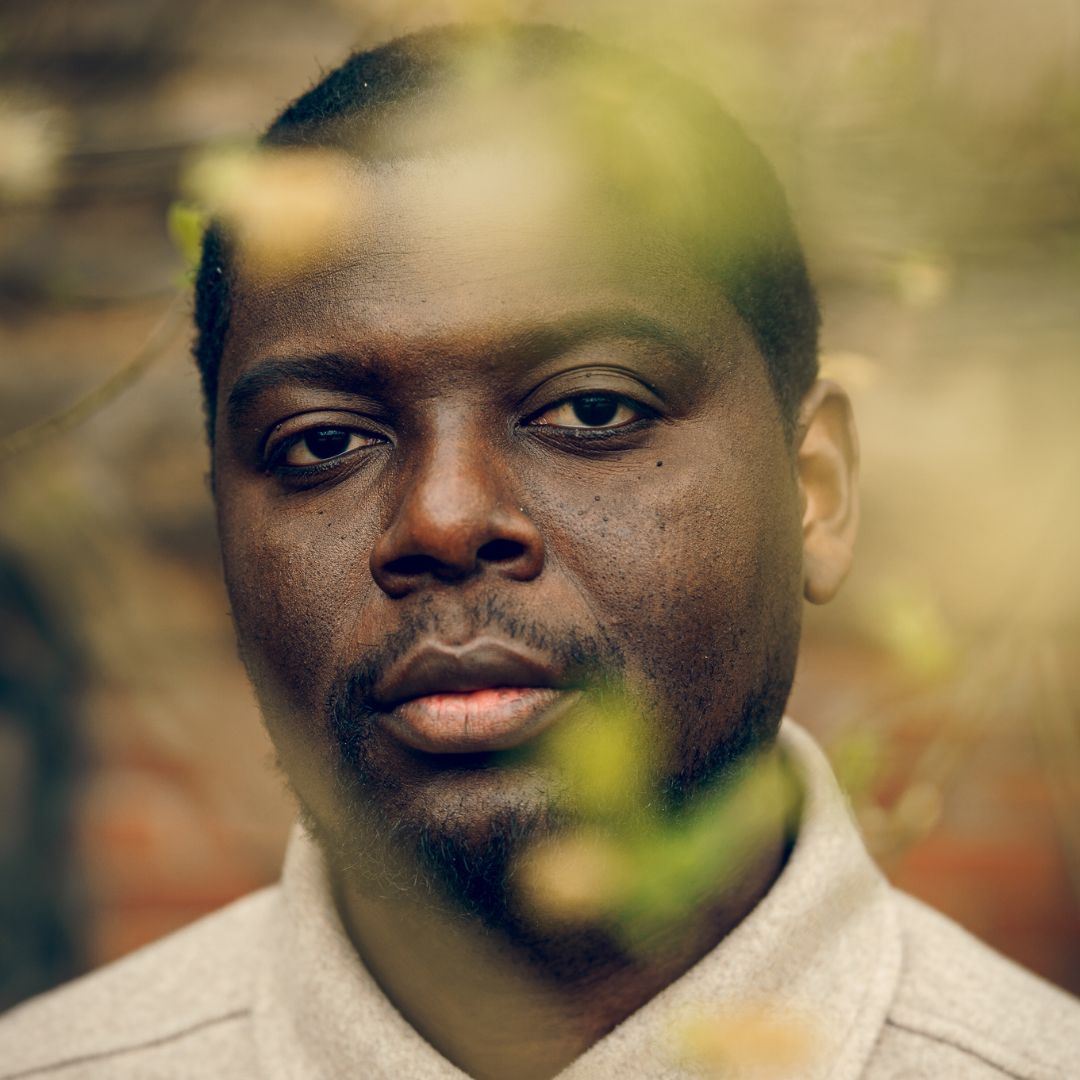
Richard Kudekha-Lark is part of The Artist’s Table, a new initiative that brings together a group of artists living and making work in the North West of England to help identify and explore the skills artists need to develop now and in the future.
Richard Kudekha-Lark is a Malawian-born musician, producer, and storyteller whose genre-defying work weaves intricate narratives into richly detailed sonic worlds. Rooted in oral storytelling traditions and a deep affinity for avant-garde music, his practice moves fluidly across sound, story, and form.
Described by Pan African Music as “light, complex, rich, and immediate, swarming with micro-details that multiply with each new listen,” his music blends avant-garde jazz, folk, soulful hip-hop, R&B, and drum and bass into a style that is both timeless and evolving. Under his folk-jazz project Marco Woolf, he released the critically acclaimed EP ‘Francine, i’, which traces the emotional and social journey of an African woman migrating west with her children, earning support from BBC 6 Music, Jazz FM, and international radio.
Richard has performed extensively across the UK and Europe, headlining tours and appearing at major festivals including We Out Here, Manchester International Festival, London Jazz Festival, and So What’s Next?, establishinghimself as a distinctive voice in contemporary music.
As Note, his electronic music alias, he has released work with labels including Shogun Audio and The North Quarter. His most recent EP ‘…the thing with feathers’, inspired by his experience of grief, received critical acclaim and support from BBC Radio 1, UKF, DJ Mag, and Hospital Records, alongside a guest appearance on BBC Radio 1’s Drum & Bass Show.
Alongside his music practice, Richard is a committed creative facilitator and educator, with a strong focus on interdisciplinary collaboration and the intersections of sound, movement, image, and story. Based in the North West, he is increasingly engaged in questions of access, connection, and sustainability within creative communities. His work explores how more open, collaborative, and porous creative ecosystems can be built.
Across performance, production, and education, Richard’s practice is driven by a commitment to expanding the possibilities of musical storytelling and creating work that resonates across cultures and generations.