
Who wrote The Marriage of Figaro?
The Marriage of Figaro was written by Austrian-born Wolfgang Amadeus Mozart (1756-1791) is widely considered one of the greatest composers in the history of Western classical music.
Mozart was a child prodigy, he could pay the harpsichord by the age of three. He was composing by five, and at 13 was able to write out the entire score of Gregorio Allegri’s ‘Miserere’ after hearing it just once.
He wrote over 600 works in his lifetime and he was at the height of his powers when he lived in Vienna, he moved there in 1781 and it was the most productive and successful period of his life it was during this time that he wrote his most famous operas The Magic Flute, Così fan tutte and Don Giovanni.

What is the story of The Marriage of Figaro?
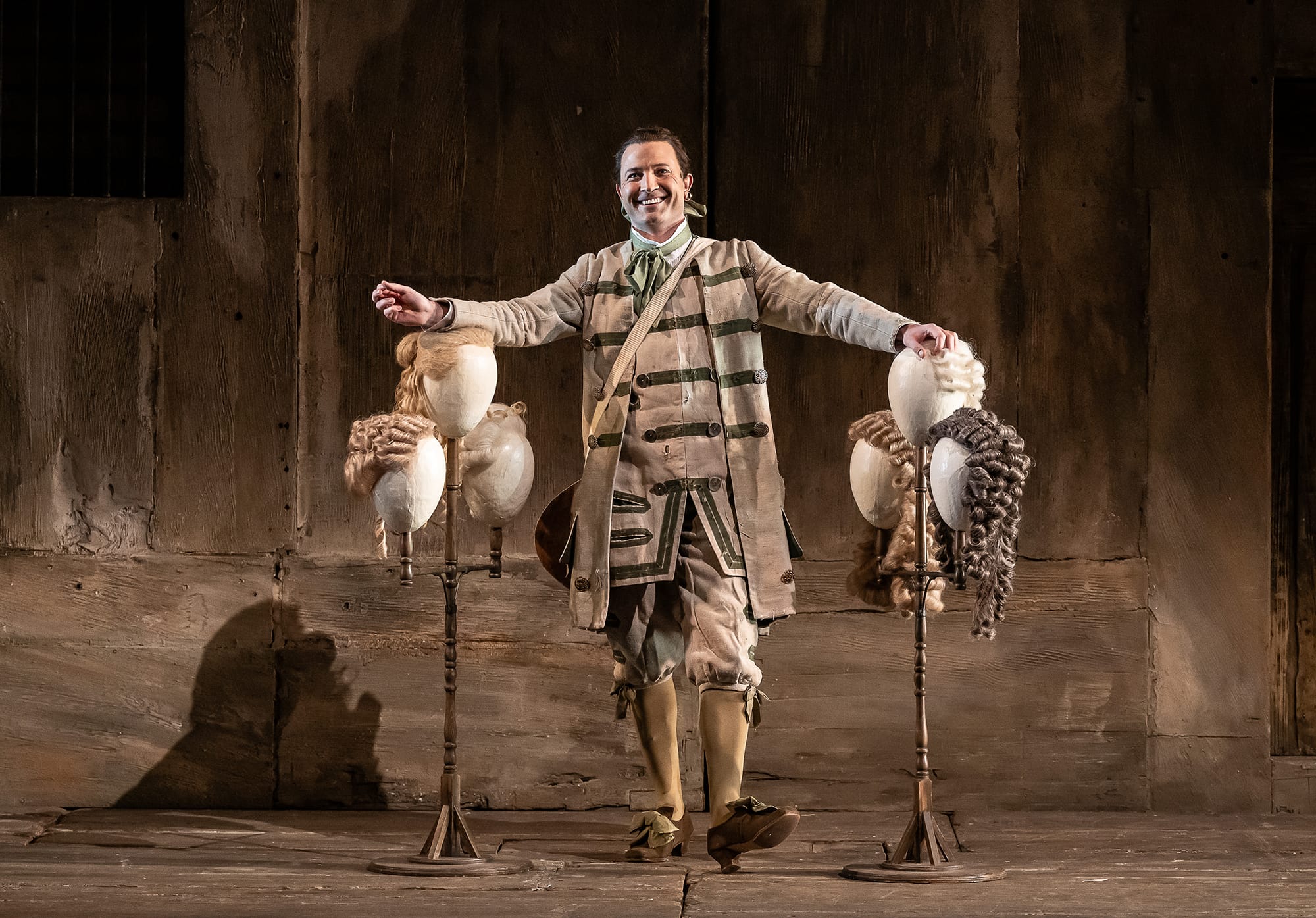
The plot of The Marriage of Figaro takes place over just a single day – that of the wedding of servants Figaro and Susanna.
The two servants are prevented from getting married by their philandering employer, Count Almaviva. His Countess works alongside Figaro and Susanna, successfully manipulating the Count and enabling them to finally marry.
The opera is full of twists and turns, mistaken identities and commentary on gender and fidelity.

Where is The Marriage of Figaro set?
The Marriage of Figaro is set in Count Almaviva’s castle near Seville, Spain in the late 18th century.
Each of the four acts of the opera takes place within the castle and it’s grounds.
Who are the main characters in Marriage of Figaro?
The key characters of The Marriage of Figaro all live inside Count Almaviva’s castle:
- Count Almaviva
- Countess Rosina, wife of Count Almaviva
- The Count’s valet, Figaro
- The Countess’s chambermaid, Susanna,
- The Count’s page attendant, Cherubino

When did Mozart write The Marriage of Figaro?
Mozart composed Le Nozze di Figaro (‘The Marriage of Figaro‘ or ‘Figaro’s Wedding’ in English) in 1786. The opera consisted of four acts and was accompanied by an Italian libretto written by the Italian poet and priest Lorenzo Da Ponte (1749-1838).
Mozart composed three operas to libretti Da Ponte (1749-1838).
- The Marriage of Figaro (1786)
- Don Giovanni (1787)
- Così fan tutte (1790)
These are considered among the greatest works of the operatic canon and all three have remained an integral part of ENO’s repertoire.

Is The Marriage of Figaro a sequel to The Barber of Seville?
Yes, The Marriage of Figaro is a sequel to The Barber of Seville, and both operas are based on plays by the French playwright Pierre Beaumarchais.
The Barber of Seville (composed by Rossini) comes first, followed by The Marriage of Figaro, which continues the story of Figaro, Count Almaviva and Rosina a couple of years later.
The Guilty Mother (composed by Darius Milhaud) is the third play in Beaumarchais’ Figaro trilogy, which continues the story of the Count and Countess Almaviva, their son Léon and Figaro.
Related content
ENO’s long and storied relationship with Mozart’s operas

The Marriage of Figaro
