Synopsis of Rise and Fall of the City of Mahagonny
Act I
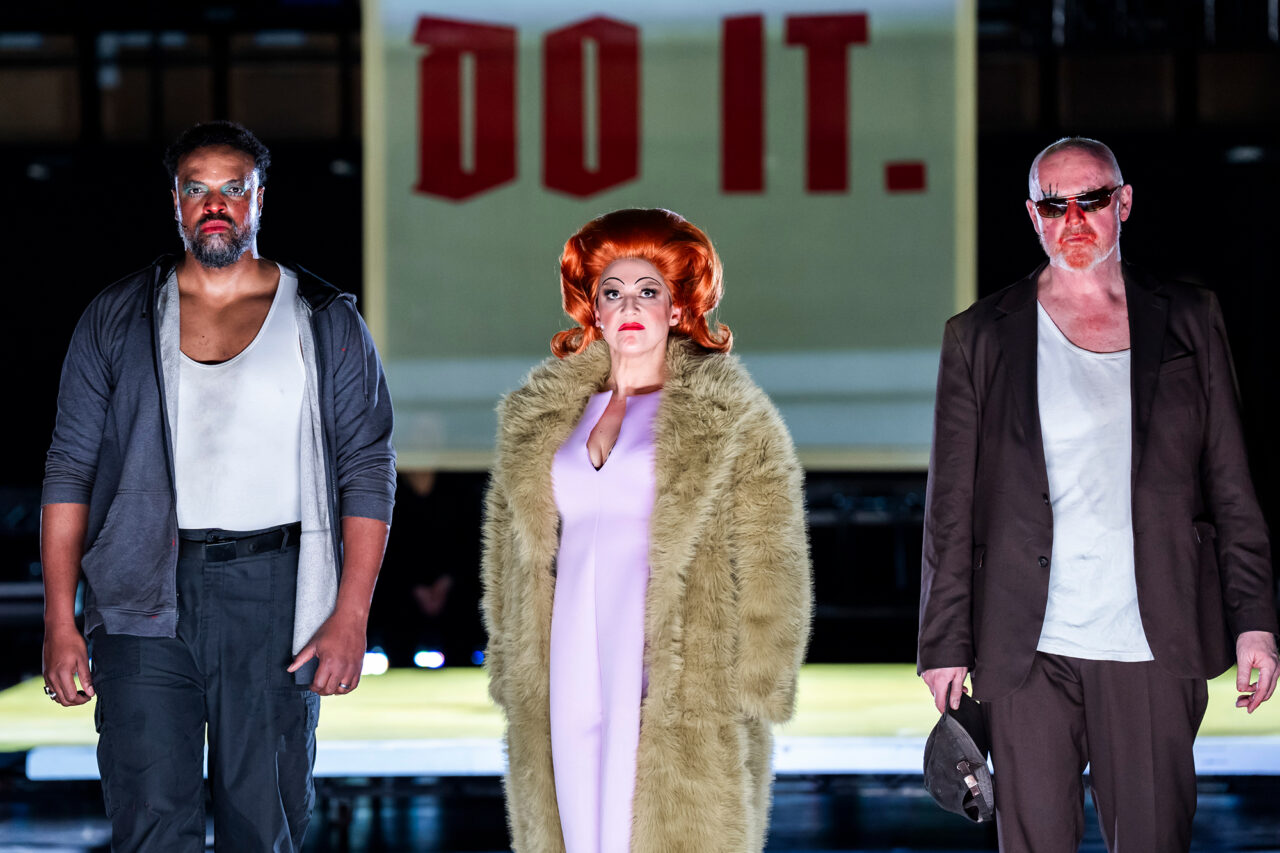
Somewhere in America. Three criminals on the lam –Fatty, Trinity Moses, and the Widow Begbick – are stranded in the desert after their truck breaks down. Begbick decrees that they will found a city called Mahagonny, a utopia of pleasure and idleness, but really a snare and a money pit.
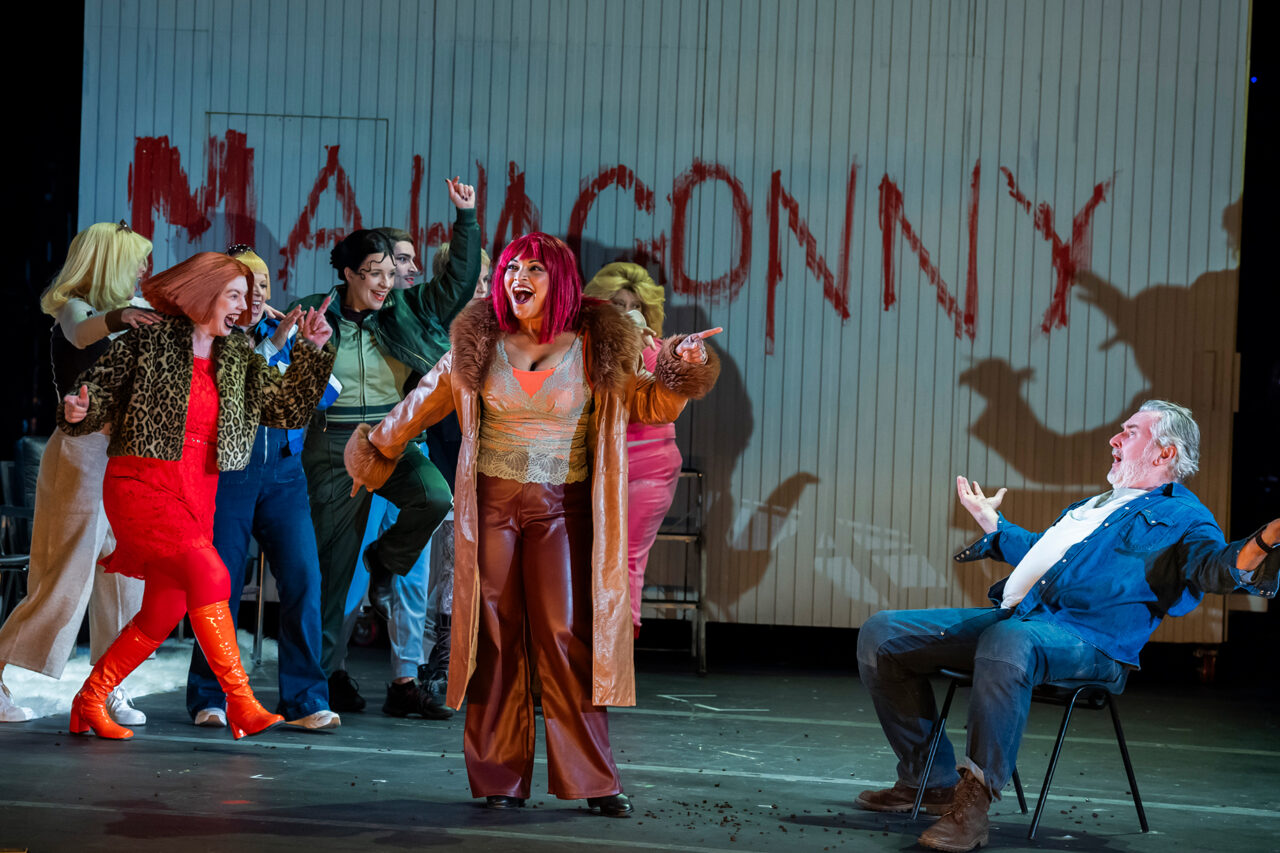
The city grows quickly, soon populated by prostitutes, led by Jenny, and the dissatisfied bourgeoisie. Then, a group of lumberjacks arrives from Alaska, lured by the city’s reputation. Begbick welcomes them as they introduce themselves: Jim (the leader), Bill, Jack, and Joe. She brings on the girls, and the lumberjacks bargain for them.
Begbick and her partners lament their inadequate income and decide to pack up and leave, but they change their minds when more suckers arrive. Jim and the lumberjacks are also dissatisfied because there is not enough action. A pianist plays “The Maiden’s Prayer” in a hotel lobby, prompting Jim to continue his lament.
Then a hurricane approaches the city, and everyone cowers in fear except Jim, who takes advantage of the impending catastrophe to declare that henceforth nothing will be prohibited in Mahagonny.
Act II
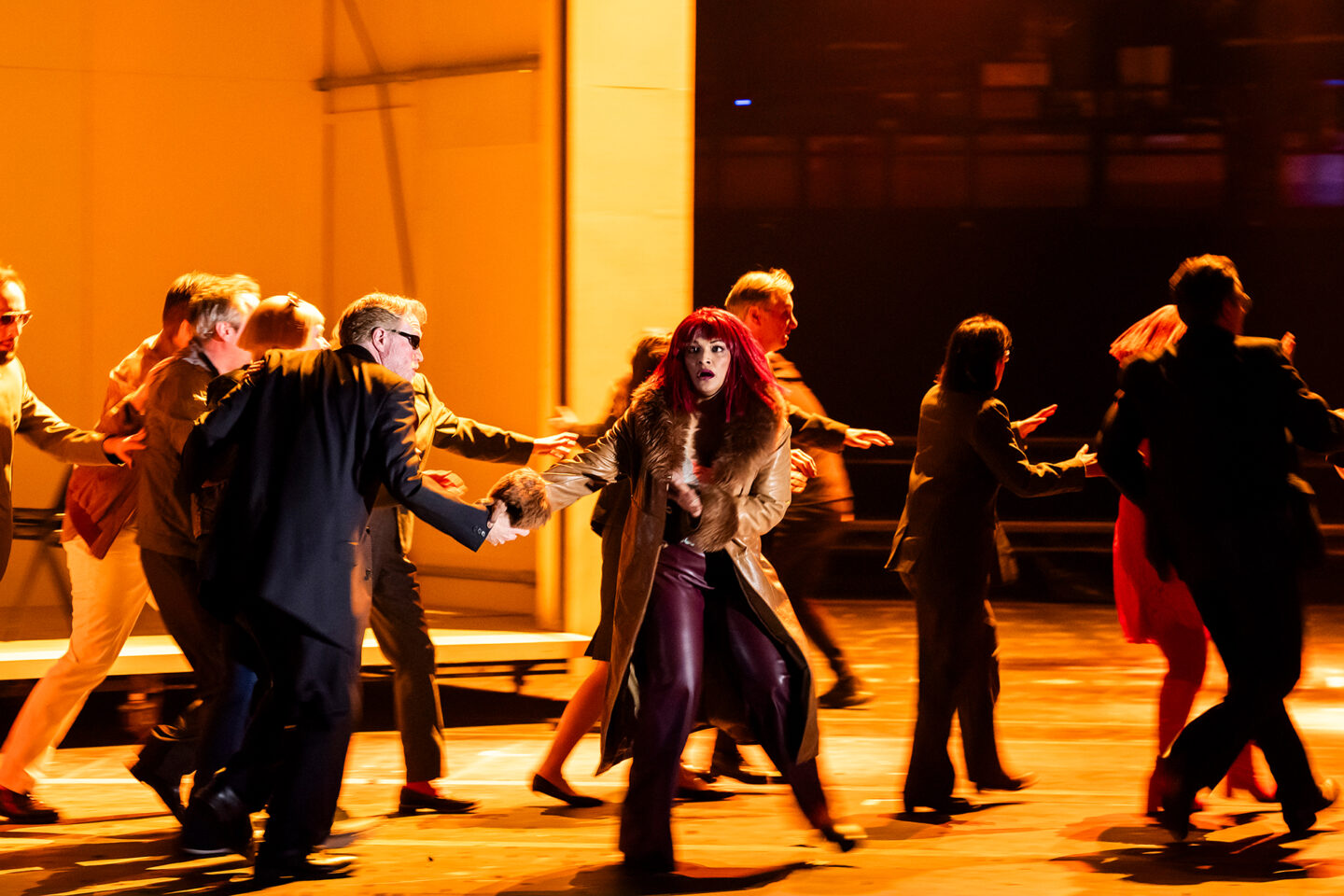
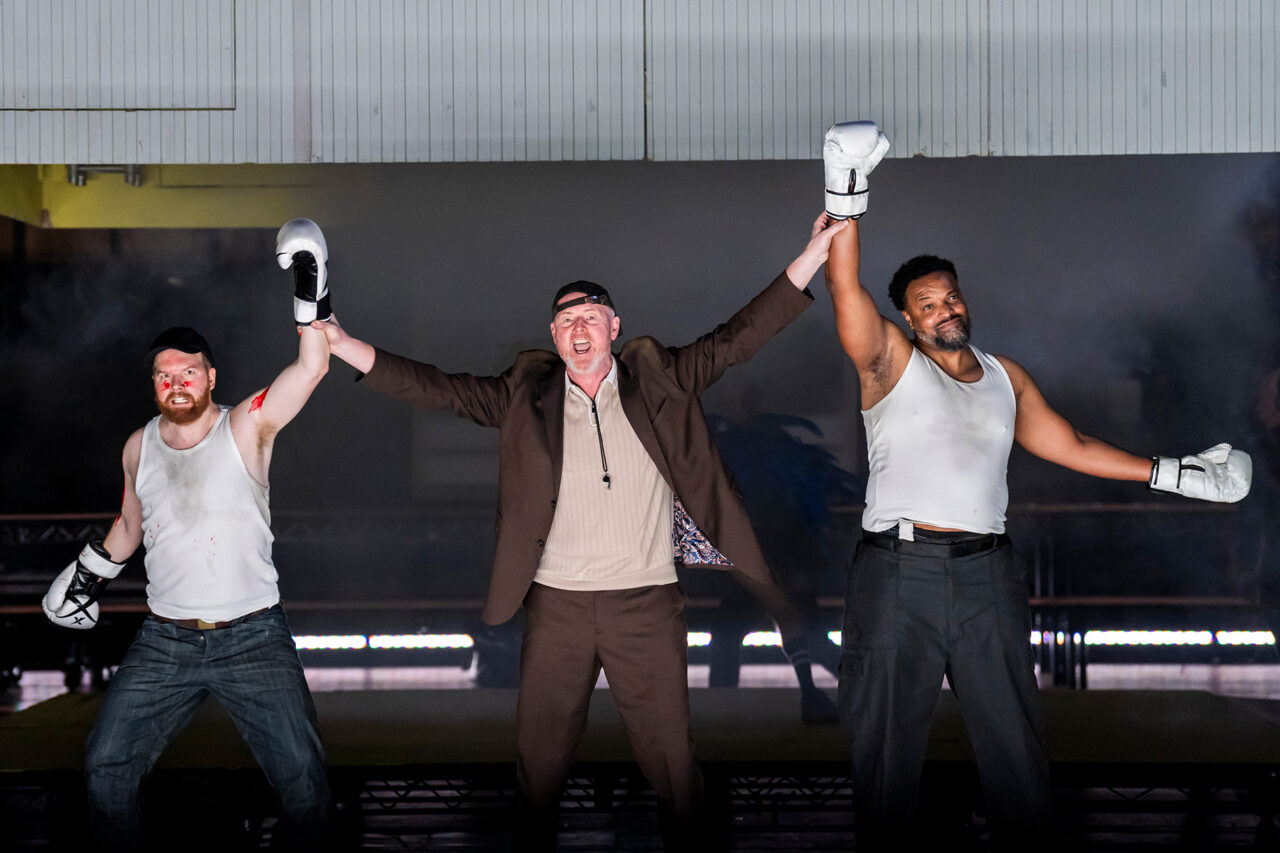
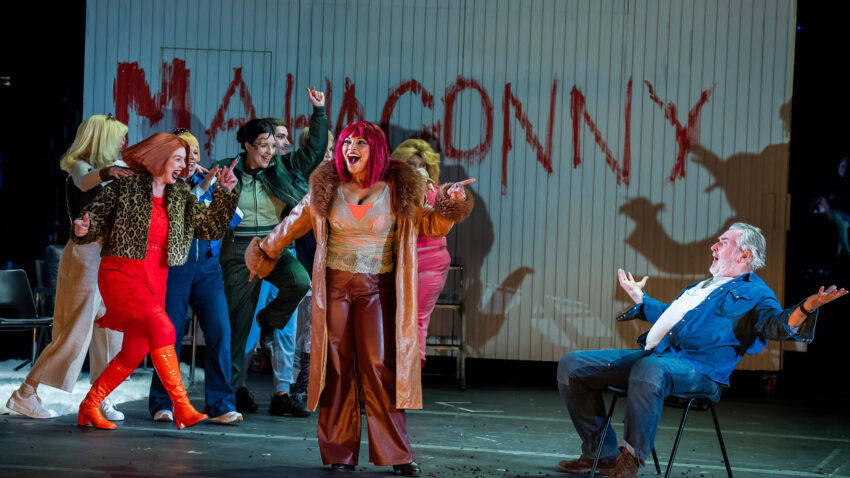
Mahagonny is inexplicably unharmed by the hurricane, and the inhabitants resume their revels. A series of tableaux follows: eating, sex, boxing, and drinking. Jack eats himself to death, the men of Mahagonny line up for the prostitutes, and Joe dies in a boxing match with Trinity Moses.
Jim invites everyone for a round of drinks, but he tells Jenny that he is out of money when the bill comes. He proposes that they escape to Alaska together, and the crowd enacts a voyage inside the bar. Then Jim admits to Begbick that he cannot pay, and he is bound and thrown into prison. When Begbick asks Jenny if she will pay for Jim, she disavows all responsibility. The chorus intones an ominous warning for Jim.
Act III
Jim languishes in prison, awaiting his trial the next morning. When the court convenes, a murderer is freed before Jim’s trial. Jim appeals to his last remaining friend, Bill, for money, but Bill refuses. Fatty, Moses, and Begbick convict Jim summarily on numerous charges, but he is condemned to death because he failed to pay his bar tab.
Jenny and others complain that they have nowhere else to go. Jim is executed, and the remaining residents lapse further into discontent.
First Begbick, then all the others, display protest placards with contradictory slogans, and it is clear that the city of Mahagonny will not survive.
Galleries and Videos



Rise and Fall of the City of Mahagonny FAQs
Rise and Fall of the City of Mahagonny is a gripping opera that explores themes of greed, hedonism and societal collapse. Set in the fictional City of Mahagonny, it tells the story of a place built on indulgence and excess, where inhabitants soon face the consequences of their unrestrained pursuit of pleasure and wealth.
Bertolt Brecht was inspired by capitalism and consumer culture in the Weimar Republic when creating Rise and Fall of the City of Mahagonny.
The opera also reflects the composer’s fascination with boomtowns and hastily built “pleasure cities” that promised freedom but often led to chaos, as in the American Gold Rush.
Rise and Fall of the City of Mahagonny was created through the collaboration of Bertolt Brecht, who wrote the libretto, and Kurt Weill, who composed the music.
The political opera combines Brecht’s sharp social commentary with Weill’s innovative musical style, making it one of the most influential stage works of the early 20th century.
Rise and Fall of the City of Mahagonny was written between 1927 and 1929.
It premiered on the 9th of March 1930 in Leipzig, Germany, where it sparked controversy and mixed reviews due to its provocative themes and satirical critique of society.
No, Mahagonny is not a real place. It’s a fictional city that serves as a backdrop for Kurt Weill and Bertolt Brecht’s critique of greed and the excesses of capitalist society, rather than representing any real location.
A gripping exploration of humanity’s pursuit of pleasure and the cost of indulgence, Rise and Fall of the City of Mahagonny remains as relevant today as ever. Nearly a century after its creation, the opera serves as a haunting mirror to our own world, reflecting modern issues such as economic inequality, corporate excess, and the moral consequences of prioritising personal gain over the common good.
Kurt Weill uses music in Rise and Fall of the City of Mahagonny to heighten the opera’s satire and emotional impact. By blending jazz, cabaret and marching rhythms with classical elements, Weill creates an often-dissonant soundscape that mirrors the chaos and decadence depicted in the story.
Related Content
An Introduction to Rise and Fall of The City of Mahagonny
Creating a World out of Nothing Meet Director Jamie Manton and Designer Milla Clarke