The life of Igor Stravinsky: A summary
The following section will provide a brief overview of Stravinsky’s life. This includes information on his background, career and key accomplishments.
Early life and education
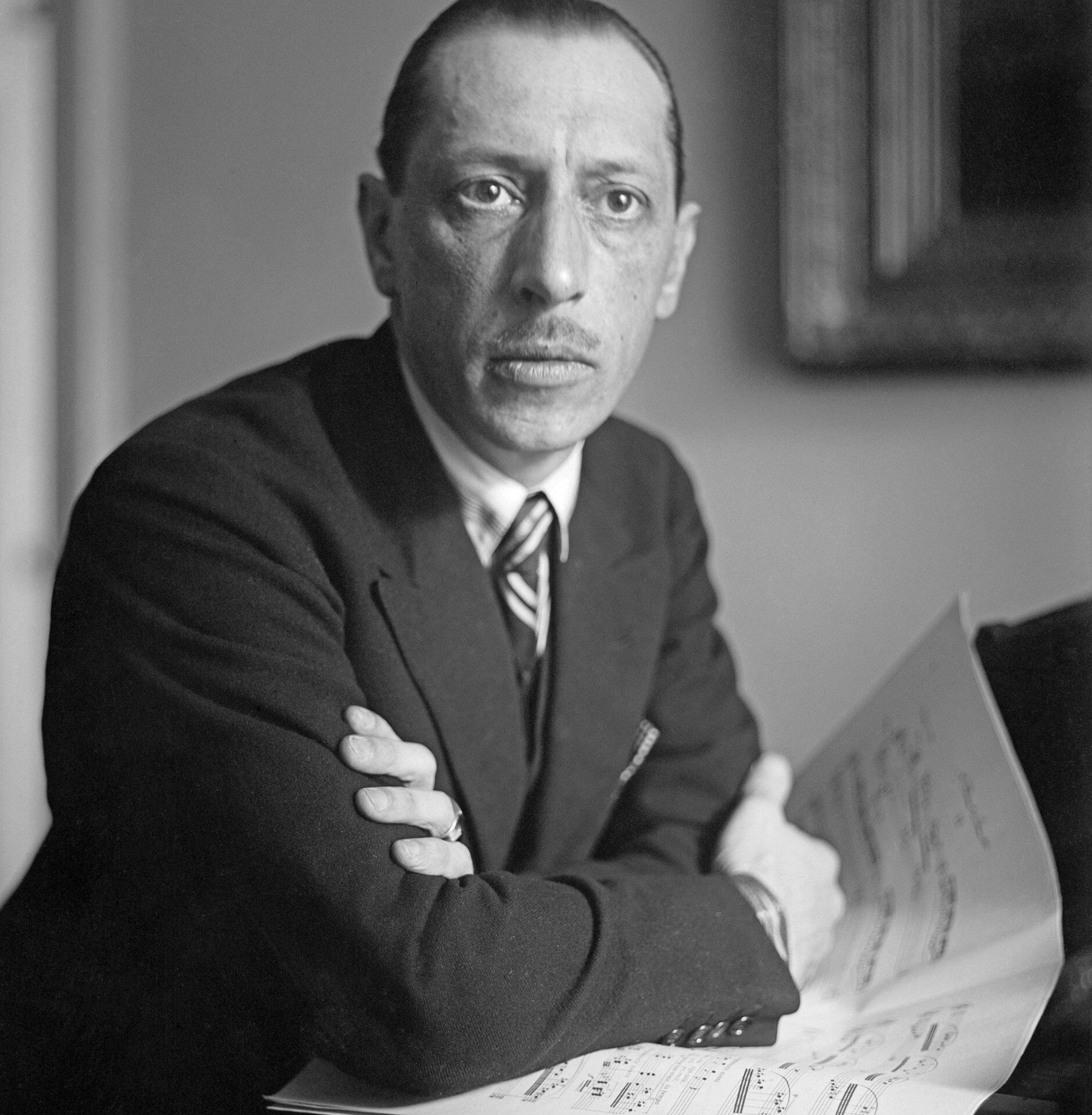
Igor Stravinsky was born on June 17, 1882, in Oranienbaum (now Lomonosov), near St. Petersburg, Russia, and spent much of his childhood in the cultural hub of St. Petersburg. His father, Fyodor Stravinsky, was a celebrated bass singer at the Mariinsky Theatre, and his mother, Anna, came from a family with strong musical traditions. This artistic environment exposed Igor to music early, though his parents encouraged him toward a more conventional career. He initially enrolled at the University of St. Petersburg to study law, but his interest in music steadily grew during these years.
Stravinsky began taking private lessons with Nikolai Rimsky-Korsakov, one of Russia’s most prominent composers, who became a guiding influence and helped refine his orchestration skills. His first notable composition, Fireworks (1908), attracted the attention of Sergei Diaghilev, the visionary impresario behind the Ballets Russes. This connection launched Stravinsky’s career, leading to commissions for The Firebird (1910), Petrushka (1911), and The Rite of Spring (1913). These works shocked audiences with their bold rhythms and harmonies, marking Stravinsky as a revolutionary force in modern music and setting the stage for his lifelong exploration of new styles.
Career highlights
Igor Stravinsky’s career was marked by constant reinvention and groundbreaking works that shaped modern music. His most famous compositions include The Firebird (1910), a lush ballet based on Russian folklore; Petrushka (1911), which introduced bold rhythmic complexity; and The Rite of Spring (1913), whose shocking dissonance and primal rhythms caused a legendary riot at its premiere but later became a cornerstone of 20th-century music. These early works were inspired by Russian folk traditions and his collaboration with Sergei Diaghilev’s Ballets Russes.
Stravinsky’s achievements extended beyond his Russian period. He pioneered neoclassicism with works like Pulcinella (1920) and later embraced serial techniques in pieces such as Agon (1957). He collaborated with major artists, including Pablo Picasso and choreographer George Balanchine, and wrote influential books like Poetics of Music. His music appeared in films such as Disney’s Fantasia, and he received numerous honors, including the Léonie Sonning Music Prize and a Grammy Lifetime Achievement Award.
Controversies surrounded his radical innovations – The Rite of Spring premiere remains one of music history’s most infamous events – and his stylistic shifts often divided critics. Yet his adaptability and originality secured his legacy as one of the most transformative composers of all time.
Later Life
In his later career, Igor Stravinsky continued to reinvent himself, moving beyond his early Russian ballets into neoclassical and serial styles. Notable works from this period include Oedipus Rex (1927), a striking opera-oratorio, and The Rake’s Progress (1951), which showcased his mastery of neoclassicism. He also explored twelve-tone techniques in compositions such as Agon (1957), proving his ability to adapt to evolving musical trends. These works cemented his reputation as a composer who never stood still, constantly challenging conventions and expanding the language of modern music.
Stravinsky spent his final years in the United States, becoming a naturalized citizen in 1945 and remaining active as a conductor and lecturer. He died on April 6, 1971, in New York City at the age of 88, and was buried in Venice, near his friend Sergei Diaghilev. His legacy is immense: Stravinsky transformed the course of 20th-century music, influencing composers across genres and leaving behind masterpieces like The Firebird, Petrushka, and The Rite of Spring. Today, his works remain central to concert repertoires worldwide, celebrated for their innovation, rhythmic vitality, and enduring impact on modern composition.
Igor Stravinsky’s musical style and influence
Igor Stravinsky’s musical style is defined by constant reinvention and bold innovation. His early works, such as The Firebird and The Rite of Spring, drew heavily on Russian folk traditions, using vibrant orchestration, asymmetrical rhythms, and striking harmonies. These ballets introduced rhythmic complexity and irregular accents that broke away from the smooth phrasing of Romantic music, influencing modern composers and even jazz musicians.
In the 1920s, Stravinsky shifted toward neoclassicism, embracing clarity, balance, and forms inspired by Baroque and Classical traditions, evident in works like Pulcinella and Oedipus Rex. Later, he adopted serialism, using twelve-tone techniques in pieces such as Agon, blending strict structure with his rhythmic vitality. Stravinsky believed music should be an autonomous art form, free from excessive emotionalism, focusing instead on craft and structure. His rhythmic innovations, use of bitonality, and modular approach to composition remain influential today, shaping film scores, contemporary classical music, and even minimalist and avant-garde movements.
Igor Stravinsky’s most famous songs
‘No word from Tom’ – The Rake’s Progress
‘I Burn! I Freeze!’ – The Rake’s Progress
‘Here I stand’ – The Rake’s Progress
‘Gently, little boat’ – The Rake’s Progress
‘I go, I go to him’ – The Rake’s Progress
‘Dikere non possum’ – Oedipus Rex
‘Nonne erubescite’ – Oedipus Rex
Igor Stravinsky’s most famous operas
The Nightingale (Le Rossignol) – Completed in 1914, based on Hans Christian Andersen’s fairy tale, blending Russian lyricism with modernist touches.
Mavra – A short comic opera from 1922, inspired by Pushkin and showcasing Stravinsky’s neoclassical style.
Oedipus Rex – Written in 1927, an opera-oratorio in Latin that combines ritualistic drama with bold orchestration.
The Rake’s Progress – Premiered in 1951, a full-length opera in English inspired by Hogarth’s engravings, marking the height of Stravinsky’s neoclassical period.
Igor Stravinsky’s music continues to inspire audiences and composers worldwide, with his bold innovations shaping the course of modern music. To explore more about opera and discover new productions, visit eno.org and the ENO Operas page.
FAQs
Igor Stravinsky’s style was defined by innovation and versatility. He began with lush, folk-inspired works like The Firebird, then shocked the world with the raw rhythms and dissonance of The Rite of Spring. Later, he embraced neoclassicism, favoring clarity and traditional forms in works such as Pulcinella and Oedipus Rex. In his final period, Stravinsky explored twelve-tone serialism, blending strict structure with his signature rhythmic vitality. Strong influences included Russian folk music and his mentor Rimsky-Korsakov. His belief that music should prioritize craft over emotion shaped modern composition, and his rhythmic techniques, bitonality, and modular structures remain widely used in contemporary classical music and film scores.
Igor Stravinsky’s most famous piece is widely considered to be The Rite of Spring (1913). This groundbreaking ballet shocked audiences at its premiere with its raw, primal rhythms, dissonant harmonies, and unconventional choreography, sparking one of the most infamous riots in music history. Today, it is celebrated as a masterpiece that revolutionized 20th-century music, influencing composers, film scores, and even popular genres with its rhythmic complexity and bold orchestration.
Igor Stravinsky was not formally ‘exiled’ in the sense of being banished, but he left Russia and never returned after the Russian Revolution of 1917. The Bolshevik regime imposed strict ideological control over the arts, favouring socialist realism and limiting creative freedom. Stravinsky’s modernist style and association with Western cultural circles did not align with the new government’s artistic vision. Additionally, the revolution cut him off from his financial resources and property in Russia, making it impossible for him to sustain his career there.
In 1920, Stravinsky settled in Western Europe, first in Switzerland and then France, where he continued composing and collaborating with artists like Sergei Diaghilev. His departure was both a personal and artistic necessity, allowing him to maintain independence and pursue innovation without political constraints.
The most controversial ballet by Igor Stravinsky is The Rite of Spring (1913). Its premiere in Paris caused an uproar, with the audience reacting violently to its shocking rhythms, dissonant harmonies, and unconventional choreography. This event became one of the most infamous moments in music history, symbolising a radical break from tradition and ushering in modernism in the arts.
Yes, it is widely believed that Coco Chanel and Igor Stravinsky had a brief romantic relationship in the early 1920s. After Stravinsky fled Russia following the revolution, Chanel invited him and his family to stay at her villa outside Paris. During this time, Chanel was already a major figure in fashion, and Stravinsky was working on revising The Rite of Spring. Their connection was marked by mutual admiration and artistic influence, though the affair was never officially confirmed and remains the subject of speculation. The story inspired Chris Greenhalgh’s novel Coco and Igor and the 2009 film Chanel Coco and Igor Stravinsky, which dramatises their rumored romance.
Related content

A Beginner's Guide to Opera Genres

Beginner's Guide to 20th Century Composers