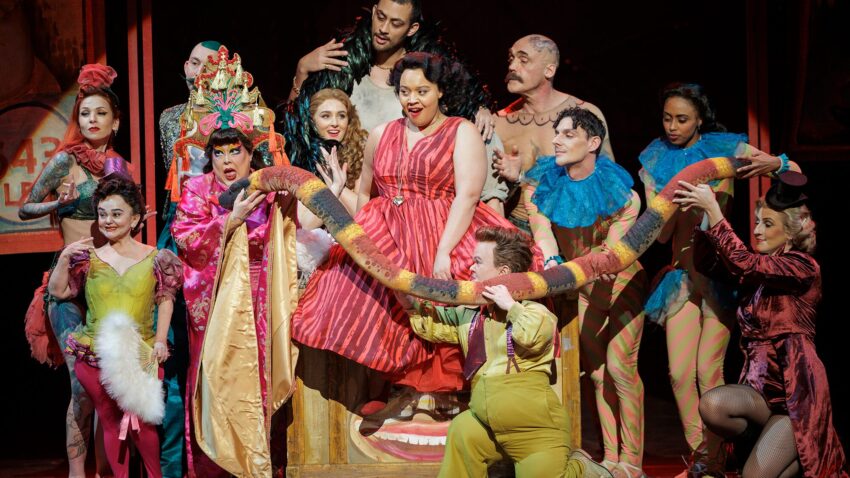
Moving Mozart into 1950s Coney Island
Mozart could never have imagined Così fan tutte like this, yet according to Designer Tom Pye a fairground is the perfect setting for such a vibrant emotional rollercoaster of an opera. He suggested to Director Phelim McDermott that they move Mozart’s tale of 18th-century Naples to 1950s America, and, specifcally, New York’s iconic Coney Island funfair.
‘At face value, Così can be quite a cynical, unpleasant story. However, when I was asked to work with Phelim, I’d loved his [1990s theatre production] Shockheaded Peter and knew he liked a darker aesthetic, so I wondered how I could combine innocence with darkness. I hit upon Coney Island: that kind of slightly more sinister, unsettling world, and that kernel of an idea really grew. We looked at 1950s B-movies and tried to recreate a bit of that world too.’
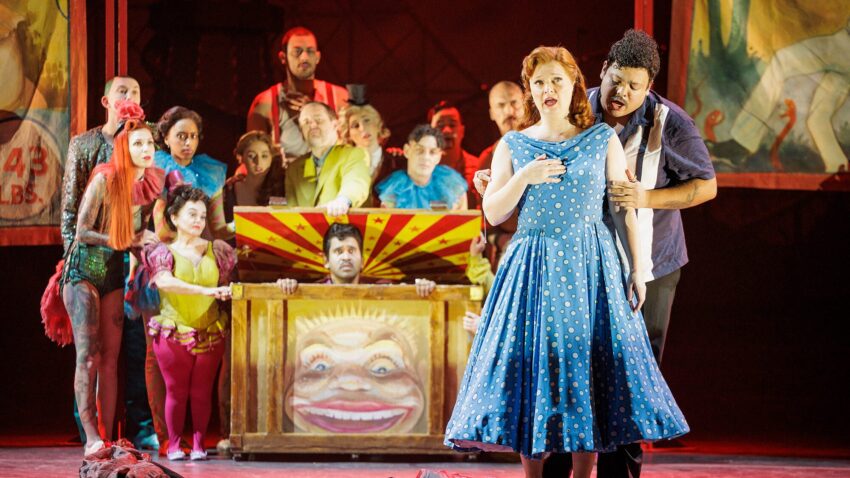
Our end-of-the-pier atmosphere fits really well with the madness of the storyTom Pye, Designer, Così fan tutte
A playful set design
Although inspired by the libretto, Tom says the set design is more closely shaped by Mozart’s music. ‘When he wrote it, scene changes were very simple, swapping one backdrop for another, so you often have only a few seconds – complete changes of scene and mood have to take place in sometimes just eight bars of music. That’s a challenge.’
‘We worked out from that how we could set a section of the show in a nearby motel – reinforcing the idea they were all away from home on vacation. We then added revolving walls to give us multiple identical rooms the characters could come in and out of, that sat very well with how Mozart wrote.
He might give you a solo, then a duet, and then others join and, suddenly, you’re in a beautifully balanced sextet – but with characters in multiple rooms singing together. We used a model to add a level of complexity and comedy – we had great fun imagining three rooms in a row with them running from room to room, sometimes listening through the walls – echoes of French farce. It’s fun to play around while listening to the music and seeing how such ideas develop.’

Bringing out the detail of the libretto
This fairground interpretation also brings out some often neglected detail of the original libretto, by Mozart collaborator Lorenzo Da Ponte.
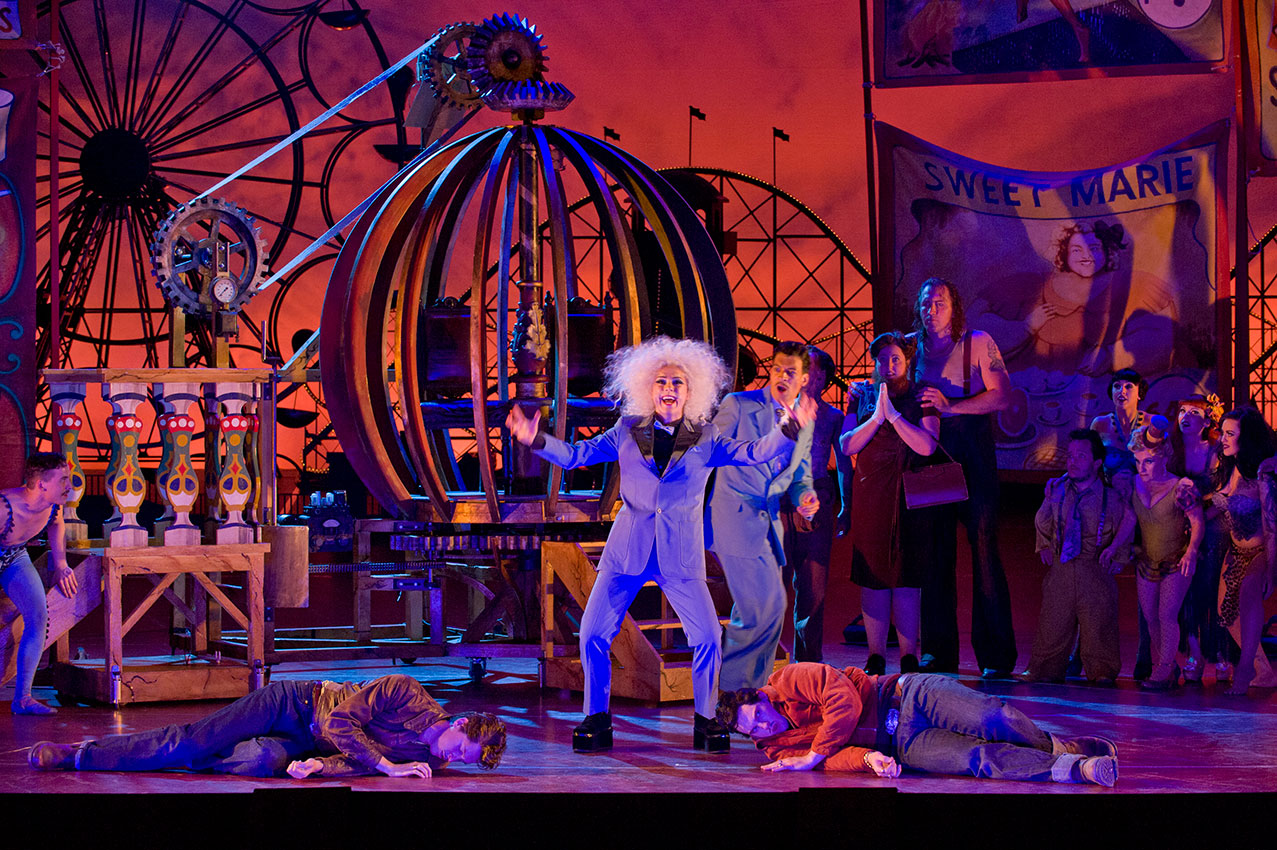
‘There are parts where you just think “what the hell is going on?” – for instance, when Ferrando and Guglielmo are faking being poisoned and Despina is disguised as a doctor trying to “cure” them using magnets. It was satirical when it was written, sending up quack doctors who practised such treatments, but, actually, it makes no sense in a modern context, so other productions have tended to gloss over it.
However, we went the other way and said “let’s make a huge thing of it”, and put a huge magnet on stage, and made it all look like the opening credits of [British 1960s sci-fi TV show] Joe 90. Some things simply bloomed into other ideas, which we used to explore how mad and dark and intimidating the whole environment could become.’
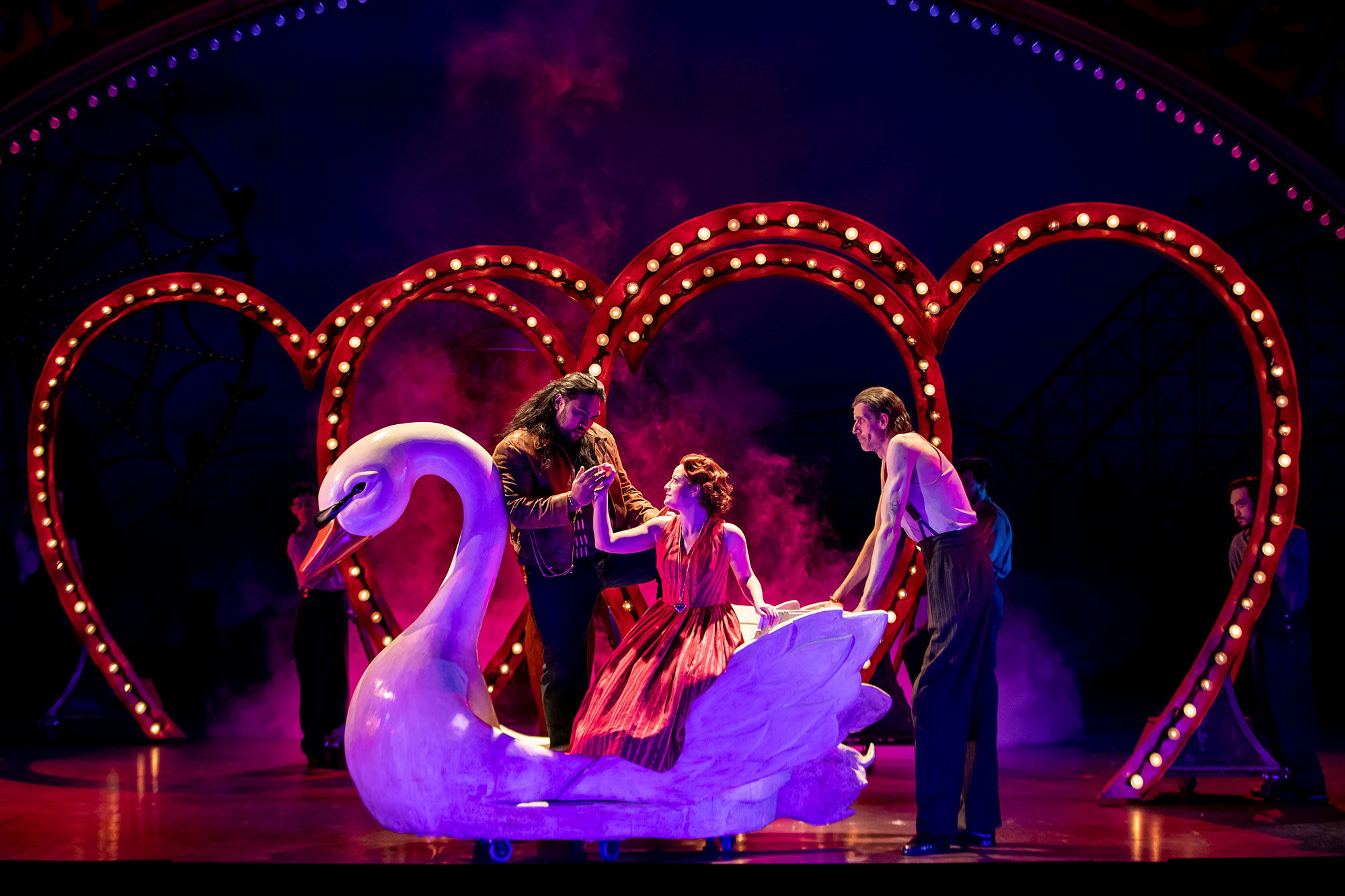
'I wanted the fun for the audience to be “which ride are we going to next?” So the couples start on the teacups, then move to the carousel, and then the Ferris wheel, so, hopefully, when the swan turns up on stage, the audience is thinking, “Of course! We’re going in the Tunnel Of Love!'Tom Pye, Designer, Così fan tutte
ENO's production
ENO debuted this production at the London Coliseum in 2014, since when it has enjoyed two runs at New York’s Met Opera before returning to London in 2022. Many of the fairground entertainers come from the real Coney Island and are returning together with the inventive set and its vividly coloured aesthetic.
‘It’s light and fluffy to draw you in, then gets more sinister and serious. Someone once described Mozart’s music as like cream cakes but with razor blades in. I think that sums up our Così!’

Related Content
An Introduction to Così fan tutte